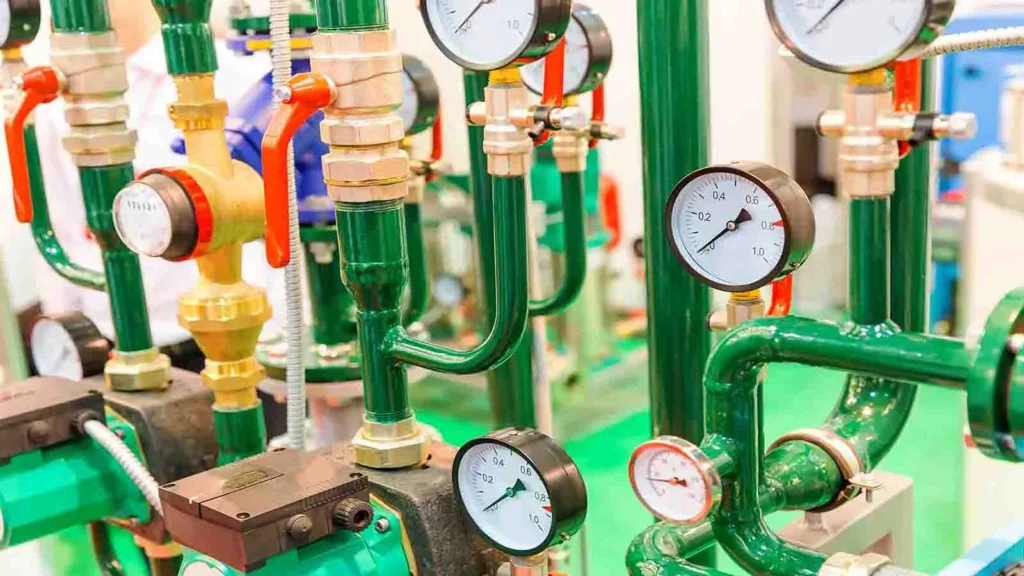
Instrumentation & Control Design Course In Ahmedabad prepares students for the growing demand in this field, driven by rapid industrial expansion. National forecasts indicate a steady rise in the need for skilled Instrumentation Engineers across diverse sectors such as manufacturing, energy, healthcare, food production, mining, and environmental management. The course equips learners with the skills needed to enter consultancy roles and hands-on technical positions across these industries.
Professionals in this domain are responsible for measuring and regulating key physical variables like temperature, pressure, and flow. They also work with actuators, positioning devices, and control systems to ensure safe and efficient operations. The Instrumentation & Control Design Course In Ahmedabad focuses on practical training and real-world applications, making students job-ready for modern industries that rely heavily on accurate control and automation technologies
Field Scope & Importance
- Learn how to monitor and control industrial processes for optimal performance and safety.
- Understand the selection and application of sensors for measuring temperature, pressure, flow, and level.
- Explore PLC, SCADA, and DCS systems used to automate and regulate complex industrial operations.
- Gain knowledge in transmitting, conditioning, and interpreting signals from field instruments.
- Master calibration procedures to ensure accuracy and reliability of instrumentation.
- Study relevant standards like ISA, IEC, and ISO that govern instrumentation and control practices.
Eligibility
- Fresh/Experienced, Degree/Diploma Instrumentation Engineers
- Fresh/Experienced, Degree/Diploma Electrical Engineers
Working Steps for Instrumentation & Control

System Design
Plan and design instrumentation systems to measure and control process variables like pressure, flow, and temperature.

Component Selection
Choose suitable sensors, transmitters, controllers, and actuators based on system requirements.

Instrument Setup
Install and calibrate instruments to ensure accuracy and reliable system operation.

Performance Monitoring
Continuously monitor system performance and conduct regular maintenance to ensure optimal functionality.
Curriculum
- Instrumentation Design - An Introduction
- Starting a Project
- Control Valve Sizing & Selection
- Flow Instruments
- Level Instruments
- Pressure Instruments
- Instrumentation Control
- Layout & BOQ
- Protection System
- Detail Engineering Project Deliverables
Core Functions of Instrumentation & Control

Real-Time Monitoring
Learn to track & manage industrial processes through accurate instrumentation.

Sensor Applications
Learn how various sensors measure flow, pressure, and temperature.

Control Integration
Gain skills in working with PLC, SCADA, and DCS for process automation.

Signal Conditioning
Explore how signals are processed and transmitted from instruments to control units.

Calibration & Maintenance
Develop expertise in calibrating instruments to maintain accuracy and reliability.

Standards & Safety
Learn industry regulations and safety standards essential for instrumentation practices.
In today’s fast-growing industrial landscape, the demand for skilled professionals in automation, process control, and smart systems has never been higher. If you are searching for a high-quality Instrumentation & Control Design Course in Ahmedabad, you are at the right place. Ahmedabad, being one of the major industrial and educational hubs of Gujarat, offers excellent opportunities for students and working professionals who want to build a strong career in instrumentation and control engineering. This comprehensive guide covers everything you need to know about pursuing an Instrumentation & Control Design Course in Ahmedabad – from curriculum and skills to career scope and learning outcomes.
Why Choose Instrumentation & Control Design as a Career?
Instrumentation and control engineering is the backbone of modern industries such as oil & gas, petrochemicals, pharmaceuticals, power plants, manufacturing, food processing, and even emerging sectors like renewable energy and Industry 4.0. The role of an instrumentation and control engineer is to design, develop, install, manage, and maintain equipment that monitors and controls engineering systems, processes, and machinery.
By enrolling in a well-structured Instrumentation & Control Design Course in Ahmedabad, students gain hands-on knowledge of sensors, transmitters, controllers, PLCs, SCADA, DCS, and advanced automation tools that are widely used across industries. The practical exposure combined with strong theoretical foundations prepares you to solve real-world industrial challenges efficiently.
What You Will Learn in an Instrumentation & Control Design Course in Ahmedabad
A good Instrumentation & Control Design Course in Ahmedabad is designed to bridge the gap between academic learning and industry requirements. The syllabus generally covers the following core areas:
- Fundamentals of Instrumentation Engineering You begin with the basics – measurement principles, accuracy, precision, rangeability, calibration techniques, and error analysis. Understanding how different process variables (pressure, temperature, flow, level) are measured forms the foundation of any Instrumentation & Control Design Course in Ahmedabad.
- Sensors and Transducers In-depth study of various sensors – RTDs, thermocouples, pressure transmitters, flow meters (orifice, vortex, ultrasonic, Coriolis), level sensors (capacitive, radar, ultrasonic), and analytical instruments (pH, conductivity, dissolved oxygen). You learn selection criteria, installation guidelines, and troubleshooting methods.
- Control Valves and Final Control Elements Control valve sizing, Cv calculation, actuator types (pneumatic, electric, hydraulic), positioners, I/P converters, and smart valve technology are critical topics covered thoroughly.
- Process Control Fundamentals Open loop vs closed loop control, PID tuning methods (Ziegler-Nichols, Cohen-Coon), cascade control, ratio control, feed-forward control, and advanced strategies like model predictive control (MPC).
- Programmable Logic Controllers (PLC) Hands-on training on leading brands such as Siemens, Allen-Bradley, Schneider, and Delta. You learn ladder logic programming, function block diagrams, structured text, and HMI development.
- Supervisory Control and Data Acquisition (SCADA) Design and development of SCADA systems using Wonderware, WinCC, Ignition, or FactoryTalk View. Real-time data logging, alarm management, trending, and remote monitoring are practiced extensively.
- Distributed Control Systems (DCS) Architecture of popular DCS platforms like Honeywell TDC3000, Emerson DeltaV, Yokogawa Centum VP, and ABB 800xA. You understand the difference between PLC and DCS and when to use each.
- Industrial Communication Protocols Detailed study of Fieldbus (Foundation Fieldbus, Profibus), HART, Modbus RTU/TCP, Ethernet/IP, Profinet, OPC UA, and wireless protocols like WirelessHART and ISA100.
- Safety Instrumented Systems (SIS) and Functional Safety Understanding IEC 61511, SIL (Safety Integrity Level) calculation, safety lifecycle, emergency shutdown systems (ESD), fire & gas systems, and HIPPS.
- P&ID Reading and Instrumentation Drawings Mastering Piping and Instrumentation Diagrams, loop diagrams, hookup drawings, junction box schedules, cable schedules, and instrument location plans – a must-have skill for every instrumentation engineer.
- Industrial Automation and Industry 4.0 Integration of IIoT, cloud-based monitoring, digital twins, cybersecurity in automation, and machine learning applications in predictive maintenance.
- Hands-on Lab and Live Projects Most reputed institutes offering Instrumentation & Control Design Course in Ahmedabad provide fully equipped laboratories with live process skids, real transmitters, control valves, PLC panels, and DCS workstations so that students get industry-like exposure.
Who Should Enroll in Instrumentation & Control Design Course in Ahmedabad?
This course is ideal for:
- Fresh B.E./B.Tech graduates in Instrumentation, Electronics, E&TC, Electrical, or Mechatronics
- Diploma holders looking to upgrade their skills
- Working professionals seeking career growth or lateral movement into automation
- Entrepreneurs planning to start automation solution companies
- Anyone passionate about smart manufacturing and process automation
No matter your background, a well-designed Instrumentation & Control Design Course in Ahmedabad can open doors to exciting opportunities both in India and abroad.
Benefits of Studying Instrumentation & Control Design Course in Ahmedabad
- Strategic Location Advantage Ahmedabad and nearby areas like Vadodara, Ankleshwar, and Surat host hundreds of large-scale industries – refineries, fertilizer plants, pharmaceutical giants, textile units, and engineering companies. This gives students easy access to industrial visits, internships, and placement opportunities.
- Experienced Faculty from Industry Many institutes bring trainers who have 15–25 years of field experience in projects executed for Reliance, ONGC, GSFC, Torrent Pharma, Adani, and international EPC companies.
- 100% Practical-Oriented Training Unlike purely academic programs, a professional Instrumentation & Control Design Course in Ahmedabad focuses heavily on live demonstrations, lab practice, and real-time project work.
- Global Certification Preparation Several courses prepare you for internationally recognized certifications such as Certified Automation Professional (CAP), Certified Control System Technician (CCST), and TUV Functional Safety Engineer.
- Strong Placement Support Reputed training providers maintain active ties with leading automation companies, EPC contractors, system integrators, and panel manufacturers across Gujarat and pan-India.
Key Skills You Gain After Completing the Course
After successfully completing an Instrumentation & Control Design Course in Ahmedabad, you will be proficient in:
- Reading and creating P&IDs and instrumentation drawings
- Selecting the right instrument for a given application
- Sizing control valves and orifice plates accurately
- Programming PLCs and configuring SCADA/DCS
- Performing loop checking, calibration, and commissioning
- Troubleshooting complex control loops
- Designing safety instrumented functions (SIF)
- Implementing industrial networking and cybersecurity best practices
These skills make you job-ready from day one.
Career Opportunities After Instrumentation & Control Design Course in Ahmedabad
The scope for instrumentation and control engineers is immense. Some of the common job roles include:
- Instrumentation Design Engineer
- Control System Engineer
- Automation Engineer
- PLC/SCADA Programmer
- DCS Engineer
- Project Engineer – Instrumentation
- Commissioning Engineer
- Field Service Engineer
- Functional Safety Engineer
- BMS (Building Management System) Engineer
- IIoT and Digital Transformation Consultant
Industries actively hiring include oil & gas, petrochemicals, power, water treatment, pharmaceuticals, cement, steel, FMCG, automotive, and renewable energy. With the government’s push toward “Make in India” and smart factories, the demand for trained professionals is only going to increase in the coming years.
How to Choose the Right Instrumentation & Control Design Course in Ahmedabad
With many institutes offering similar-sounding programs, here are a few checkpoints to help you make the best choice:
- Check the detailed syllabus – does it cover PLC, SCADA, DCS, P&ID, and field instruments comprehensively?
- Verify lab infrastructure – are live process plants and branded hardware available?
- Look at trainer credentials – do they have actual site experience?
- Ask for student reviews and placement records
- Confirm if the course includes live projects and industrial visits
- See if post-training support and doubt-clearing sessions are provided
A genuine Instrumentation & Control Design Course in Ahmedabad will always focus on practical skills rather than just theory and certificates.
Future Trends Shaping Instrumentation & Control Engineering
The field is evolving rapidly. Some trends you will be introduced to during a forward-thinking Instrumentation & Control Design Course in Ahmedabad include:
- Integration of Artificial Intelligence and Machine Learning in process optimization
- Edge computing and 5G-enabled wireless instrumentation
- Cloud-based SCADA and remote asset management
- Augmented Reality (AR) for maintenance and training
- Cybersecurity standards like IEC 62443
- Digital twin technology for predictive maintenance
- Green instrumentation for sustainability and net-zero goals
Staying updated with these trends gives you a significant edge in the job market.
If you are serious about building a rewarding career in one of the most sought-after engineering domains, enrolling in a high-quality Instrumentation & Control Design Course in Ahmedabad is one of the smartest decisions you can make. The combination of world-class training facilities, experienced mentors, and proximity to Gujarat’s industrial belt makes Ahmedabad an ideal destination to master instrumentation and control engineering.
Whether you are a fresh graduate or a working professional, the skills you gain will remain relevant for decades and open doors to opportunities across the globe. Start exploring reputed Instrumentation & Control Design Course in Ahmedabad options today, and give your career the boost it deserves!